Showing posts with label fungal conservation. Show all posts

Sunday, April 12, 2015

Two new fungal citizen science initiatives!

Citizen science can be a highly valuable way to engage the public in research and generate a quantity and quality of data that otherwise wouldn't be feasible. While some projects draw on a highly informed amateur mycologist community and others other aim to inform/engage a more general public, the kinds of projects mentioned in this post help to bridge the gaps between researchers and the public while contributing to fungal conservation and monitoring programs.


New and developing initiatives:

Discovering Plant Destroyers in South Africa with Citizen Science - Forestry and Biotechnology Institute (FABI), University of Pretoria (Joey Hulbert)
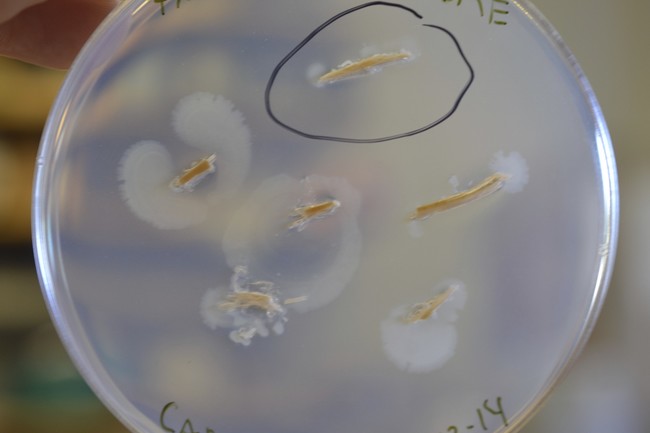
Cultures growing from plant tissue [photo - J. Hulbert]
This project seeks to discover new species of Phytophthora in the forests of South Africa while engaging the public in the science process. Phytophthora is a genus of major plant pathogens (not ~technically~ a fungus, yes, I know) responsible for Sudden Oak Death (P. ramorum) and many other diseases across a wide range of plants. This project focuses on the forest diseases and aims to document unknown Phytophthora species sourced from leaf/soil/water samples collected by volunteers. Through workshops and the recruitment/training of volunteers, Joey hopes to increase access to science in underserved communities.

I'm listing this project first because there is less than two weeks left to donate to Joey's experiment.com page (this stage of fundraising ends April 23). [Update: funded!]
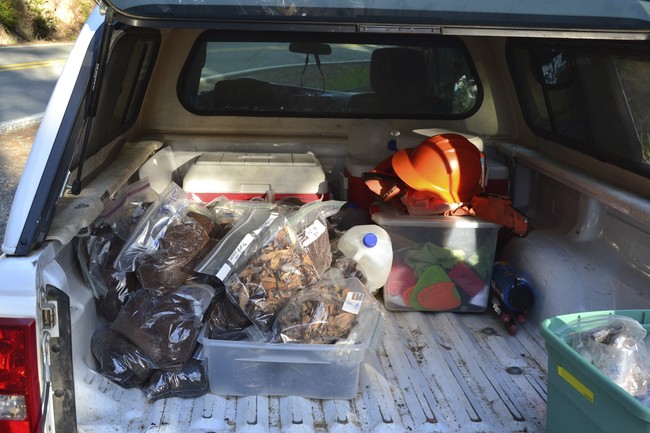
The post-sampling haul [photo - J. Hulbert}
Read more about the project and donate here!


The Lost & Found Fungi Project - Royal Botanic Gardens, Kew

This project aims to join the mycology team at RBG Kew and the knowledgeable non-professional mycologists of Britain to assess the conservation status of rarely reported fungal species. The long history of British naturalists and their particular record-keeping habits give the project a starting point for identifying the species with a low or decreasing number of reports and sites, and the large number of mycological societies and individual naturalists with an interest in mycology form a preexisting highly knowledgeable network of volunteers.

Paul Cannon (RGB Kew mycology dept) photographs Xenotypa aterrima during a survey for Dencoeliopsis johnstonii, a small discoid fungus that grows on/with  X. aterrima. 

 This project has been funded by the Esmee Fairbairn Foundation and is just getting off the ground as I write this.

Brian Douglas (project coordinator) inspects a fungarium specimen of an Ustilago species.
For those interested, the work flow of this project is approximately as follows:
1.  Identification of target species that are either genuinely rare or simply underreported
2.  Identification and recruitment of volunteer groups and individuals to be part of the L&F network
3.  Mapping of current and historical recording sites of each species using RGB Kew's fungarium records and FRDBI records
4.  Creation of info sheets that include description, sites, photos, and other information for public dissemination
5. Surveys or requests (timed seasonally) for targeted surveys by people/groups located in regions with historic records to give both positive and negative records
6. Processing of received samples of putative targets
7.  Assessment of "true" rareness of species and assessment of vulnerability level of habitat
8 . Formation of surveillance plans and conservation plans for truly rare and threatened species


The historical collections of Hypocreopsis lichenoides. The fungarium (fungal herbarium) at RGB Kew is the largest in the world and contains thousands upon thousands of collections representing species from around the globe. Each preserved and documented specimen is a unique historical record. Some contain photographs, microscope slides,  handwritten letters. The red folder indicates the specimen contained within may be the "type specimen," the collection from which the original species description is derived. 
Learn more about the target species and the Lost & Found Fungi Project at their website, and follow them on Twitter!

Part of my love of projects that increase access to and involvement in biodiversity projects stems from a small fungal diversity survey that was included in Dr. Ann Willyard's "Algae & Fungi" course that I took at Hendrix College during undergrad. This project (and getting the Watson, of course) was part of what made me shift my approach to mycology from a hobby to an academic pursuit. That said, part of the power of citizen science is that it can give people with scientific and naturalistic tendencies but no wish to join academia access to resources and impactful outputs.

So, to any undergrad profs out there: contribute to your region's documentation of fungal diversity, give hands-on direction of collecting/vouchering/barcoding fungi, and encourage young mycologists with similar projects!
(The class produced a tiny publication discussing the process and results of the project which might be helpful to anyone seeking to develop and improve on similar projects- Harrington et al. 2015. Sampling local fungal diversity in an undergraduate laboratory using DNA barcoding. Journal of the Arkansas Academy of Science 68: 65-72)

Other past or ongoing fungal citizen science projects:

FungiMap.org - Putting Australian fungi on the map

"The major activity of Fungimap is a community-based mapping scheme. With the help of many volunteer observers across Australia, from professionals to amateurs, Fungimap aims to map the distribution of 125 target species of Australian fungi. These target species have been chosen so as to be reasonably easy to identify by amateurs in the field, and are generally wide-spread; you can find species descriptions of the first 100 species chosen in the Fungimap field guide Fungi Down Under.  Becoming involved in Fungimap is a very good way to gain an introduction to the world of fungi."

Sudden Oak Death Blitz - University of California, Berkeley

"SOD-blitzes inform and educate the community about Sudden Oak Death, get locals involved in detecting the disease, and produce detailed local maps of disease distribution. The map can then be used to identify those areas where the infestation may be mild enough to justify proactive management. "

North American Mycoflora Project  (and other countries' mycoflora development) - North American Mycological Association

Mycoflora are comprehensive, updated lists of the fungal diversity of a region. This list can be derived from herbarium specimens and mycological forays. The challenge is that all collections, in addition to being identified, need to be vouchered (preserved and kept in a herbarium) and ideally sequenced to be valid. Funding is a bit of an obstacle. For a real description of the problem and the possible solutions, read this article.

To an extent, websites like MushroomObserver.org and other species reporting websites are forms of citizen science as they do form a record of species distribution. The problem is that often the photos and identifications are of low quality, and more importantly, the report has no voucher. I've been guilty of this as well--with no way to legally send collections home, I had to settle for a vague ID and photo. What can ya do sometimes.

If anyone knows of other fungal (or fungus-like organism) "crowdsourcing"/"citizen science" project, send me a message to expand the post.

Thursday, September 25, 2014

Fungus and conservation at Sakaerat biosphere reserve (Thailand)


[Hiking through a dry stream bed in Sakaerat during a collecting trip]

Fungi pose peculiar compounding problems in the context of conservation. These issues range from research/infrastructural problems like the unfinished and shifting foundation of taxonomy and lack of funding for biodiversity surveys and other non-commercializable research, to global problems like the rate of habitat loss and limited awareness of and interest in fungal diversity. 


[Throughout the post are images of fungi (and some insects) found at the Sakaerat Bioreserve in Thailand.]

[A harmless giant millipede climbs a large Chlorophyllum]

 The original fungal classification system was based on morphological features, but current DNA-based molecular research methods have caused enormous shifts in mycologists' understandings of what delimits a fungal species and how the taxonomic groups are related. Because most early studies of mycology were conducted in Europe, most species descriptions and identification resources unevenly emphasize European species, and molecular work has made it clear that in many cases applying the name of a similar-looking European species to a collection from another continent is misleading and inaccurate.


[Bright orange agarics- Cystoagaricus trisulphuratus, or Agaricus crocopeplus?]
 I've noticed in Thailand and Malaysia that what few macrofungal identification resources exist are incomplete and/or inaccurate. This highlights a critical problem in fungal conservation--if the fungi aren't identified correctly or have yet to be formally described, then establishing distribution and identifying which are threatened is virtually impossible. These problems only apply where there has been at least an attempt at surveying the fungal biodiversity, but because of lack of funding, interest, and mycologists, not enough surveying has been done. Some current surveys focus on using only molecular data/DNA sequencing, but the databases that the sequences are referenced against are incomplete/inaccurate and these surveys depend on resources that may not be available in developing countries (particularly in the case of "next generation"/high throughput sequencing). 


[Phillipsia domingensis - a very conspicuous and red disc fungus that was inaccurately given the name Sarcoscypha coccinea in multiple local ID books]

When so many fungi (including the microfungi unrepresented in this post) have not been documented or described, the simplest way to conserve fungi is to maintain undisturbed habitat and continue the efforts to document native fungi. Conservation is a dual act—ideally it includes practical efforts that directly affect the organisms of interest (habitat preservation, culture banking, inoculation of trees with endangered symbiotic species, etc) and it has to change land-use behaviors and educate local people, as human activity is generally accepted as the single largest threat to biodiversity.  
[An Austroboletus parasitized by a species of Hypomyces]


 Sakaerat is a UNESCO biosphere reserve consisting of a core area of uninhabited primary forest, with a surrounding buffer zone of restored forests containing a few villages. Briefly, the goal of biosphere reserves is to connect people to their environments with an emphasis on sustainability and conservation. This approach is pretty interesting-- it aims to both conserve habitat and maintain local peoples' stake in the area.  


[Auricularia spp. - appropriately called tree ear. Species of this genus are commonly eaten in Chinese cuisine]


While reserves by definition are protected from the major land-use changes and tree harvesting that threaten many forests, Sakaerat faces particular challenges because of Thai peoples' traditional use of forest products. In Thailand, people tend to see forests as "free grocery stores," but as human population has increased and forest cover has decreased, forest product use has largely become unsustainable. Resource overuse heavily disturbs habitats, and many sought-after organisms (notably slow-growing trees and slow-reproducing animals) aren't able to maintain reproductive populations. To encourage sustainable use, Sakaerat Environmental Research Station hosts researchers working on projects in the forest, and has very frequent 2-3 day science/nature camps for Thai highschool students that emphasize the value of biodiversity and aim to change the way the next generation of Thais see the forest.

 
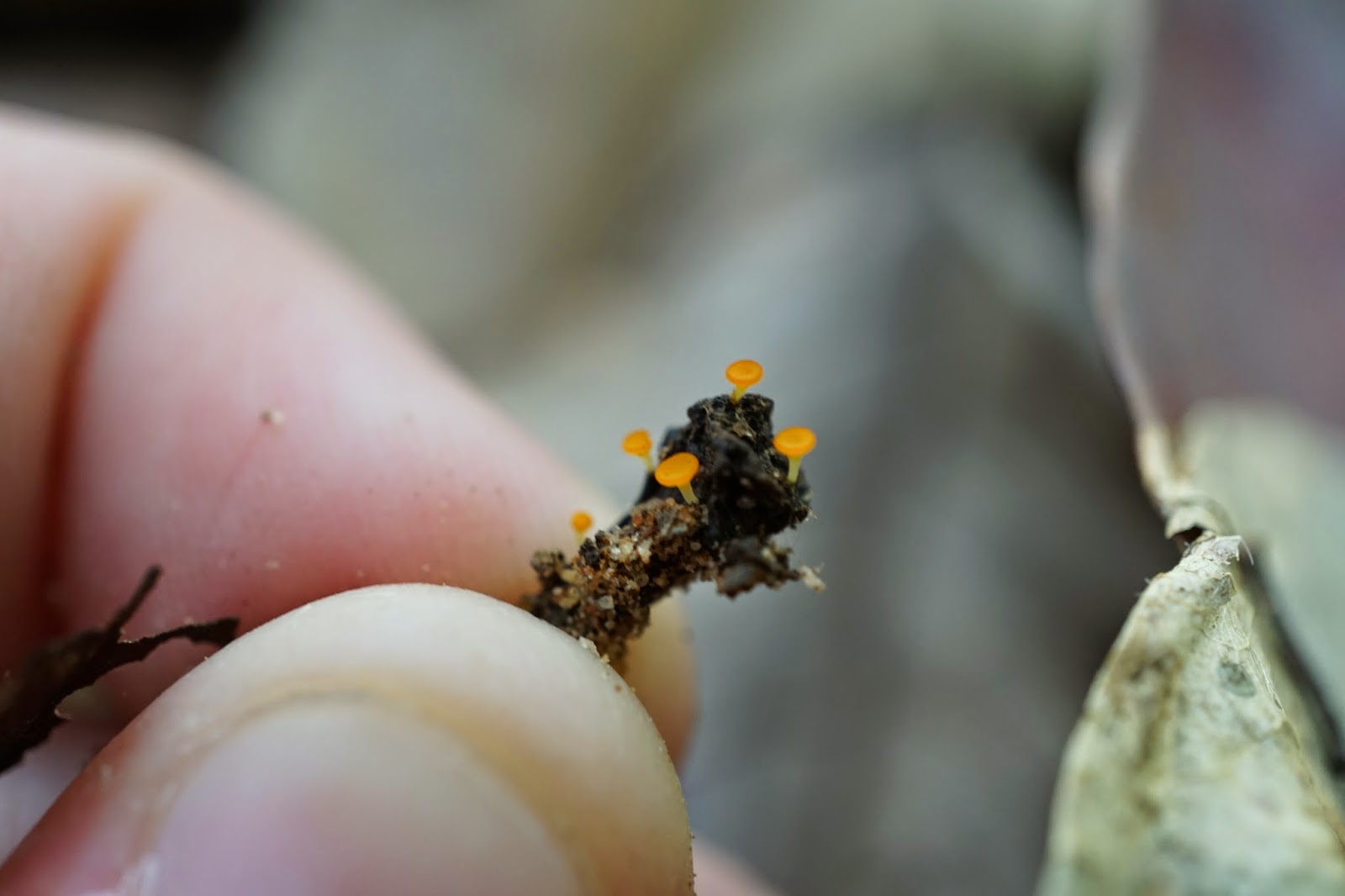
[Tiny orange cup fungus]
Sakaerat management has largely been able to reduce poaching by relocating villages located in the core region of the forest and maintaining a force of rangers, but mushroom poaching is the notable exception. A week after a heavy rain, there are easily a dozen mushroom vendors with stalls within walking distance of the entrance to the park. There have been conflicting studies on whether or not mushroom harvesting damages fungal populations (as the mushroom is a fruiting body connected to a larger mycelial organism), but undoubtedly heavy harvesting leads to habitat disturbance.

[A shopping bag of mixed wild mushrooms bought from one of many roadside stands -- boletes, Russulas, Amanitas, and more]


The problem is that it is impossible to stop mushroom poaching unless the poachers have access to an alternative source of income. There simply aren't enough rangers to prevent poaching by force, and eliminating a major source of local villagers' income would be a public-relations/local politics disaster contrary to the idea of maintaining positive human-environment interaction and including local people in conservation. 


[This batch looks like mostly Amanita]


Though this observation is based on a single day's trip to the mushroom vendors and may not be representative, the mushroom poachers appeared to be village women in their forties/fifties who specialized in mushrooms. Frustratingly, my grasp of Thai is extremely limited and I couldn't ask them questions about their work, their concerns about the business, or the reliability of mushrooms as a source of income. 


[There was great diversity and abundance of tiny leaf-litter-decaying fungi]


Sakaerat started a project to educate local people on methods to grow mushrooms and provided spawn/materials in an attempt to turn the poachers into cultivators, but this initiative didn't become self-sustaining before funding fell through. In theory, mushroom cultivation could provide a more stable source of income while reducing mushroom poaching, but until the project is restarted (and there are plans to do so) it is impossible to guess how successful it would be--would consumers discriminate between wild and cultivated species, effectively making two separate markets? it would be a big lifestyle change, are the locals willing to fully adopt cultivation? 


[Tiny, unusual pileal shape, Marasmius sp.?]


Though mushroom poaching continues for the foreseeable future, the management of Sakaerat recognizes that conservation isn't a solution but a never-ending effort, continued with ongoing research support, constant education efforts, cooperation with local people, and creative solutions to unsustainable resource use.


[A tree-like form of one of the Xylariales]
This very brief post on fungal conservation problems and efforts was partly sourced from the 2008 publication Fungal Conservation: Issues and Solutions (Moore, Nauta, Evans, Rotheroe) and discussions with mycologists and Mister Taksin, the Sakaerat forest manager. 


Particular thanks to Taksin for welcoming me (unscheduled) to the research station and for managing the biosphere reserve in an exceptional way, and to Alexander for letting me actively join his fungal diversity work in Sakaerat.


[Sakaerat hosts great insect diversity as well]


[If you look above my leg, a bee with beautiful blue striping is about to land and drink my sweat.]


[Insects provide hosts for parasitic fungi, including Ophiocordyceps nutans]


[O. nutans fruiting body poking out of soil. The insect host of the fungus was slightly buried.]


[O. nutans victims are typically stinkbugs (wiki)]